Thursday, October 29, 2026
Trivia of the Day
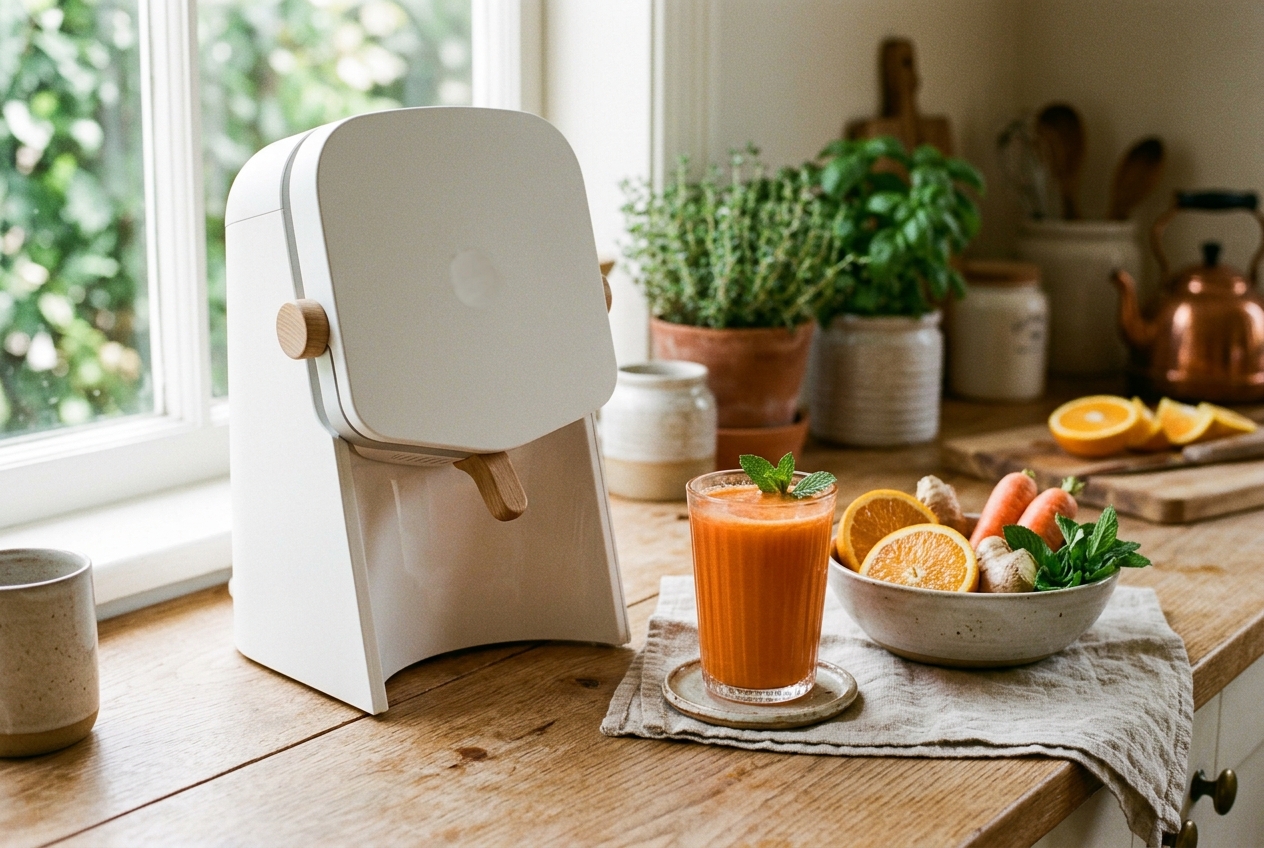
Which $400 Silicon Valley juicing machine was famously exposed when Bloomberg reporters discovered you could just squeeze the bags by hand?
- Juicero
- Keurig Kold
- Vessyl
- Bodega
Answer: Juicero — Juicero's founder compared the machine's 8,000 pounds of squeezing force to a Bugatti engine, though human hands proved equally effective.
The Pitch That Juiced $120 Million
Doug Evans launched Juicero in 2013 with a promise: cold-pressed juice at home, no mess, no cleanup, perfectly calibrated nutrition in every packet. The machine itself was a monument to overengineering—400 custom parts, a scanner to verify packet freshness, Wi-Fi connectivity to track consumption patterns, and a hydraulic press generating four tons of force. Investors including Google Ventures, Kleiner Perkins, and Campbell Soup poured $120 million into the vision over three funding rounds. Evans pitched it as the Keurig of juice, conveniently omitting that Keurig pods cannot be manually crushed. The press-release prose favored words like "farm-to-glass" and "Internet of Food," and the $400 price tag ($700 at launch) positioned Juicero as premium wellness infrastructure. By early 2017 the company had shipped thousands of units and secured retail placement at upscale grocers, appearing poised to define a category.
Bloomberg's Two-Minute Takedown
On April 19, 2017, Bloomberg reporters Ellen Huet and Olivia Zaleski published a video that required no investigative gymnastics—they simply squeezed a Juicero packet by hand. The proprietary packs, sold for $5 to $7 each, yielded their contents in roughly 90 seconds of manual pressure, versus two minutes in the machine. The produce inside was already chopped and blended; the packet was essentially a capri-sun for adults who owned Pelotons. The company had positioned the press as essential, citing safety scanners that read QR codes to reject expired packs, but the expiration date was printed in plain English on every bag. Within hours the story became Silicon Valley's platonic ideal of founder delusion: a solution in search of a problem, wrapped in design-school aesthetics and jargon about "complete nutrition systems." The machine's Internet connectivity—meant to enable automatic reordering—now read as surveillance for squeezing. Social media did what social media does, and by sunset Juicero was a punchline with a nine-figure valuation.
The Unraveling Nobody Saw Coming
Evans, who had previously founded an organic-juice company and spoke often of ten-day juice fasts, went on Bloomberg TV to defend the technology. He demonstrated the press on-air, argued that hand-squeezing required significant effort and made a mess, and suggested the average consumer lacked the grip strength for consistent results. The interview became a secondary meme; grip strength is not typically a gating factor in American kitchens. Within a week Juicero slashed the machine's price to $200, hoping to salvage the subscriber base for its high-margin juice packs, but the reputational damage was irreversible. Evans stepped down as CEO in August 2017. By September the company had burned through its venture hoard, found no acquirer willing to assume the joke, and shut down operations entirely. Customers received refunds for their machines; the juice-pack subscription service evaporated. The company's death warranted a single-sentence obituary in most outlets, the business-section equivalent of "no further questions."
Why We Still Reach for the Juicero Story
Juicero survives as shorthand for venture capital's occasional break with reality—proof that a smooth pitch deck, charismatic founder, and Tier-One backing cannot suspend the laws of user need. The episode arrived during peak hardware-startup mania, when connected devices were assumed virtuous by default and "software eating the world" had metastasized into "let's add a chip to everything." Critics now cite Juicero alongside Theranos and Bodega as evidence that some ideas deserve a single skeptical question before Series B. The story also highlighted the produce-supply complexity Juicero actually solved: the company had built a network of co-packing facilities and cold-chain logistics to deliver fresh, pre-juiced produce on subscription schedules. That infrastructure had value; the $400 squeeze machine did not. The Juicero press itself lives on in engineering schools as a cautionary tale about confusing impressive tolerances with product-market fit, and on eBay, where the devices occasionally surface as $50 kitchen-counter conversation pieces, no packets included.
What most people get wrong
Many assume Juicero was a blender or juicer that processed whole fruit; it was actually a press for pre-made juice packets, meaning the produce was already juiced before it reached your counter—the machine simply squeezed a bag.
Sources & further reading
Word of the Day
vaporware noun · VAY-per-wair
Software or hardware that is announced and marketed but never actually manufactured or released, often to mislead competitors or maintain investor interest.
“The startup's blockchain platform turned out to be vaporware—three years of demos, zero lines of shippable code.”
Joke of the Day
Why did the Juicero engineer refuse to open a bottle of wine at dinner?
Kept insisting you needed a $400 machine to properly apply cork pressure.
This Day in History
1929 — On October 29, 1929—Black Tuesday—the Dow Jones Industrial Average fell 12% in a single session as 16 million shares changed hands, erasing billions in market value and cementing the 1929 crash as the defining collapse of the pre-Depression era. Margin calls forced liquidations, ticker tape ran hours behind floor trades, and crowds gathered outside the New York Stock Exchange expecting worse news than actually materialized that day—though worse news soon followed.
Enjoyed this issue?
Get the next one free, every morning.
More from Get Rich Slower