Wednesday, November 4, 2026
Trivia of the Day
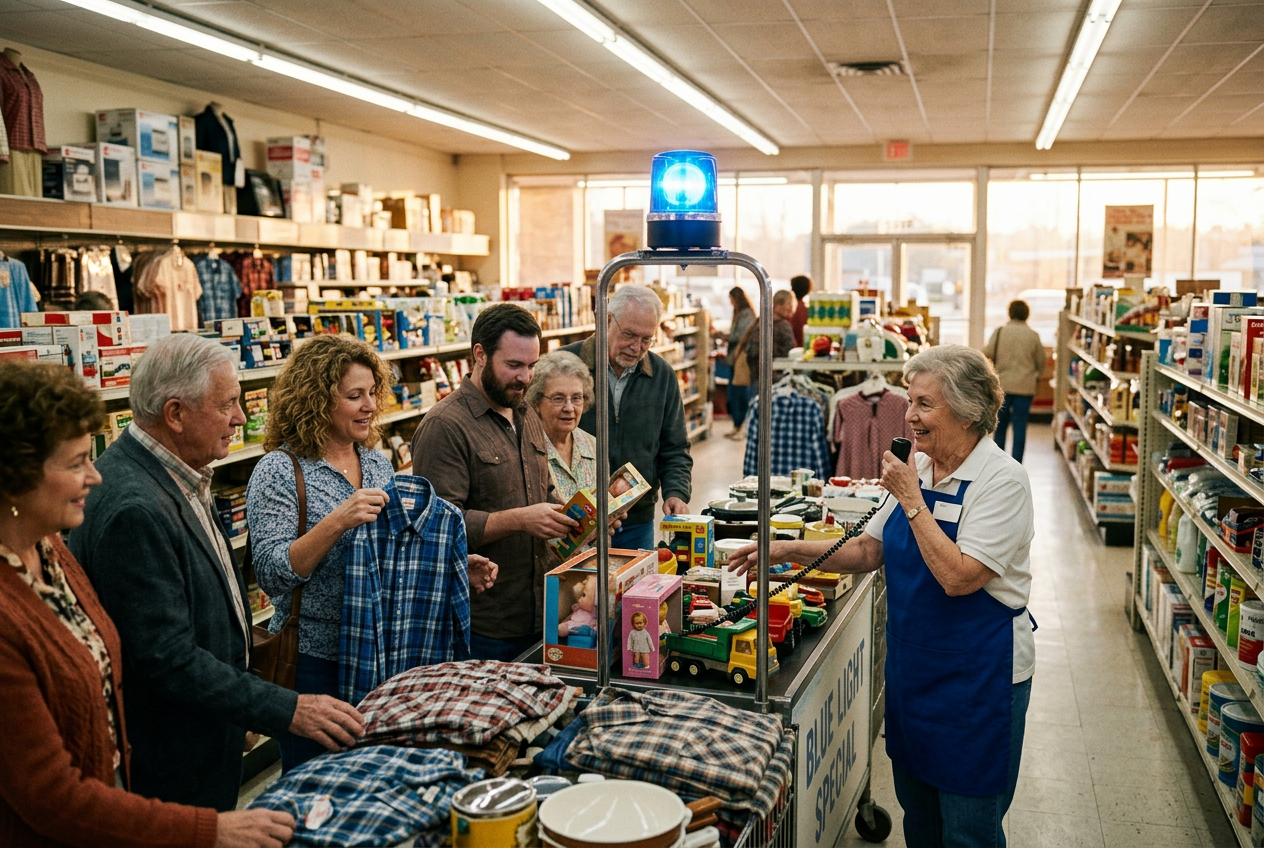
What retail chain lost the trademark to its famous "blue light special" promotion because it stopped using it?
- Sears red tag clearance event
- JCPenney doorbusters trademark
- Kmart blue light special trademark
- Woolworth's Saturday sale brand
Answer: Kmart blue light special trademark — Kmart let its blue light special trademark lapse in the 1990s and had to buy it back from an entrepreneur who registered it in 2001.
The Flashing Light That Built an Empire
Kmart invented the blue light special in 1965 as a fifteen-minute in-store flash sale, announced by a flashing police-style beacon wheeled to random aisles. Shoppers heard "Attention Kmart shoppers" over the PA and sprinted toward the blue glow for unannounced discounts on overstocked merchandise. The promotion ran multiple times daily in every store, turning boring weekday shopping into a treasure hunt. By the 1980s the blue light was American retail folklore—referenced in movies, parodied on Saturday Night Live, and synonymous with bargain hunting. Kmart moved 100 million units under the blue light in peak years, clearing inventory without advance planning or newspaper ads. The beacon itself became so iconic that Kmart filed for federal trademark protection in 1983, covering the phrase, the light, and the announcement script.
The company retired the promotion in 1991 during an upscale rebrand under CEO Joseph Antonini, who considered the blue light tacky and incompatible with Martha Stewart housewares. Kmart stopped using the phrase, stopped wheeling the beacons, and let the trademark registration lapse without renewal. For a decade the blue light lived only in nostalgia and pop culture references while Kmart chased Walmart and Target with everyday low pricing. The brand stumbled through the 1990s, closing hundreds of stores and bleeding market share. In 2001, as Kmart careened toward bankruptcy, an entrepreneur named Mark Goldstein noticed the abandoned trademark and registered "Blue Light Special" with the U.S. Patent and Trademark Office. Goldstein had no retail operation—he planned to license the name to online retailers and dot-com startups cashing in on Kmart nostalgia.
The Awkward Negotiation to Buy Back History
Kmart filed for Chapter 11 bankruptcy in January 2002, the largest U.S. retailer ever to do so at the time, with $17 billion in debt. New management wanted to revive the blue light as part of a back-to-basics turnaround, but Goldstein owned the trademark and wanted payment. The bankrupt retailer spent months negotiating with a man who had no stores, no employees, and no blue lights—just a piece of paper from the trademark office. Kmart eventually paid an undisclosed sum to reacquire the rights in late 2001 or early 2002, and relaunched blue light specials in 2005 as online flash sales on Bluelight.com. The return flopped; the internet version lacked the in-store chaos and spontaneity that made the original work. Kmart tried wheeling physical blue lights back into stores in 2009, but the culture had moved on. Shoppers in 2009 had smartphones, price-comparison apps, and Amazon Prime—a flashing beacon in aisle seven couldn't compete.
Why Trademarks Demand Constant Use
U.S. trademark law requires continuous use in commerce; abandonment for three years triggers presumptive loss of rights, and a lapsed registration opens the door for anyone to file. Kmart's decade-long silence on the blue light meant Goldstein's 2001 filing faced no active opposition. Trademark squatting—registering famous dormant marks with intent to ransom them—is legal if the original owner has genuinely stopped using the mark and allowed protection to expire. Goldstein didn't infringe; he occupied abandoned property. Major brands now monitor lapsed trademarks obsessively, renewing registrations every ten years and filing token uses to maintain protection even on retired slogans. Kmart's failure was strategic: leadership in the 1990s believed the blue light was a liability, never imagining they'd need it back. The mistake cost the company money, leverage, and time during bankruptcy proceedings. Other retailers learned the lesson—Target still renews trademarks on retired mascots, and Sears maintained rights to "Wish Book" decades after printing the last catalog.
The Blue Light's Afterlife in Bankruptcy Culture
Kmart emerged from bankruptcy in 2003, merged with Sears in 2005, and spent the next fifteen years in managed decline, closing stores yearly until fewer than twenty remained by 2020. The blue light special never regained cultural traction; nostalgia alone couldn't reverse the damage from decades of poor site selection, dirty stores, and supply chain chaos. The brand that once defined American discount retail became a case study in losing relevance—and in letting intellectual property slip away at the worst possible moment. Goldstein's trademark grab, though obscure, underscored a broader truth: in business, what you stop using someone else can own. The blue light now flickers only in retro marketing and bankruptcy court footnotes, a monument to the perils of letting go of the one thing customers actually remembered.
What most people get wrong
Most people assume Kmart always owned the blue light special trademark, but the company abandoned it during a failed upscale pivot in the 1990s and had to buy it back from an outsider who registered the dormant mark.
Sources & further reading
Word of the Day
laches noun · LATCH-iz
Unreasonable delay in asserting a legal right, used as a defense to bar a claim
“Kmart's lawyers couldn't invoke laches against the trademark squatter because the retailer itself had abandoned the blue light for a decade.”
Joke of the Day
Why did the Kmart trademark attorney refuse to play hide and seek after 2001?
Because when you stop looking for something, someone else gets to keep it.
This Day in History
2008 — Barack Obama was elected the 44th president, triggering a surge in hope-and-change branded merchandise that flooded flea markets by 2010. Commemorative plates, T-shirts, and novelty coins became the era's Beanie Babies—mass-produced collectibles that collectors never materialized to collect.
Enjoyed this issue?
Get the next one free, every morning.
More from Get Rich Slower