Monday, November 2, 2026
Trivia of the Day
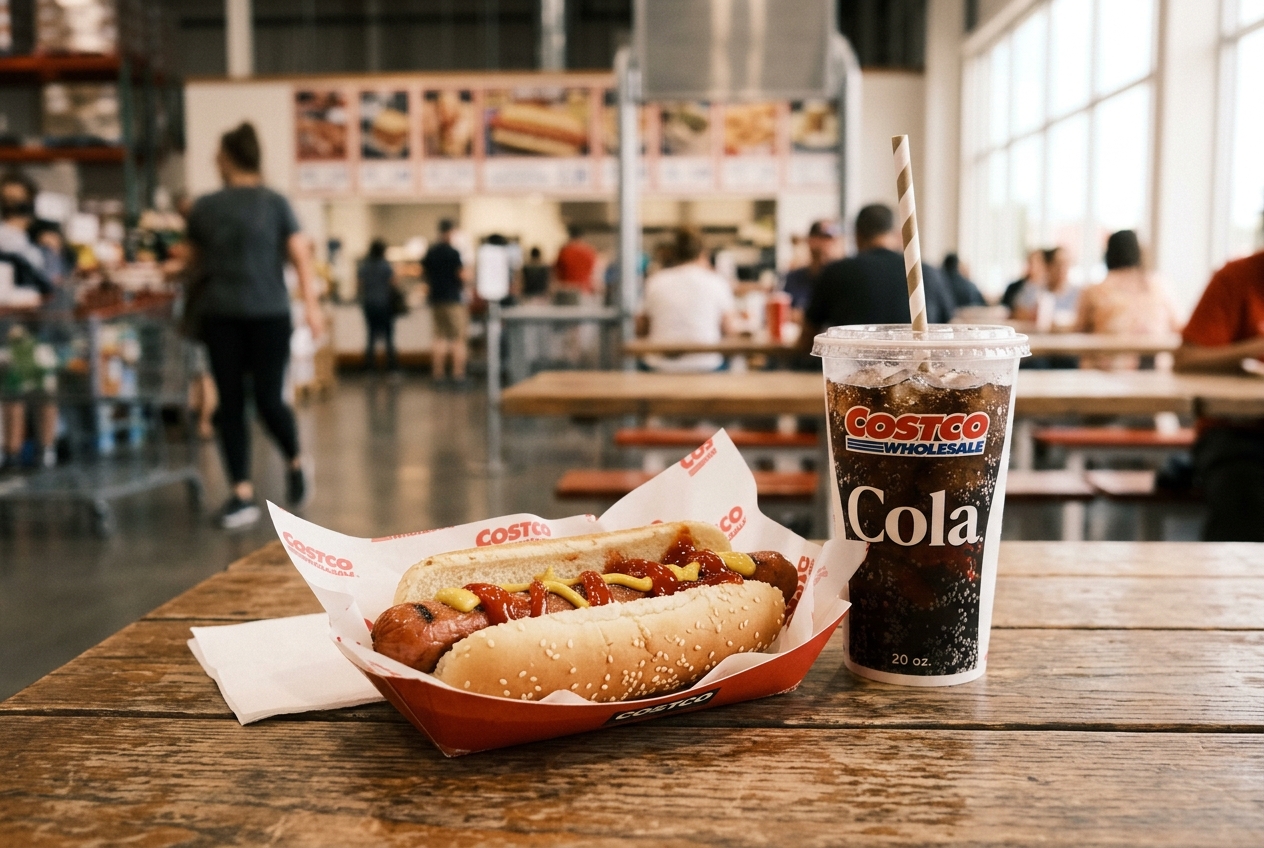
Which retailer's founder reportedly said he would kill anyone who raised the price of their $1.50 hot dog-and-soda deal?
- IKEA's 99-cent breakfast
- Costco's $1.50 hot dog and soda combo
- Sam's Club's $1 pizza slice
- 7-Eleven's Big Gulp refill deal
Answer: Costco's $1.50 hot dog and soda combo — Costco loses roughly $40 million annually on the combo but considers it essential to member loyalty and warehouse traffic.
The Death Threat That Saved a Food Court Icon
Jim Sinegal built Costco on a simple principle: treat customers right and they'll keep coming back. When he handed the CEO job to Craig Jelinek in 2012, Sinegal had one non-negotiable demand about the hot dog combo that had cost $1.50 since 1985. "If you raise the effing hot dog, I will kill you," Sinegal told his successor, according to multiple interviews Jelinek has given. The price has held through 37 years of inflation that pushed the Consumer Price Index up 180 percent. A comparable stadium hot dog now runs $6 to $8. Costco sells more than 100 million hot dog combos per year across its 600-plus U.S. warehouses, moving roughly four times the volume of all Major League Baseball stadiums combined. The quarter-pound all-beef frank and 20-ounce soda refill remain America's last great retail time capsule, frozen at a price point most members can still remember from childhood.
How Costco Absorbed Four Decades of Cost Pressure
The company couldn't defy economics forever, so it vertical-integrated its way out of the problem. In 2009, Costco opened its own hot dog manufacturing plant in Los Angeles, taking production in-house from Hebrew National and slashing per-unit costs by roughly 30 cents. The facility now produces 285 million dogs annually, supplying every U.S. and Canadian food court. Costco switched from Coca-Cola to its Kirkland Signature soda in the food courts around 2013, saving another estimated dime per combo. The buns come from Costco bakeries, the onions from Costco's own dehydration operation. Even the condiment pumps are designed to dispense precise portions that minimize waste. By controlling every input from slaughterhouse to steam table, Costco keeps the landed cost around $1.35 per combo, accepting a small loss as the price of doing business. Competitors have tried and failed: Sam's Club quietly raised its pizza slice from $1 to $1.98 in 2022, and IKEA bumped its breakfast to $1.99 in some markets.
The Loss Leader That Became a Loyalty Weapon
Costco's finance team has periodically floated the idea of a modest increase—even a quarter would add $25 million in annual revenue—but leadership treats the combo as untouchable infrastructure. Jelinek himself told investors in 2018, "I know it sounds ridiculous, but we think of it as the right thing to do for members." Internal data shows food court traffic drives incremental warehouse visits: roughly 35 percent of members who buy a hot dog also make an unplanned purchase before leaving, adding an estimated $1.50 to $3 in gross margin per visit. The combo functions as a psychological anchor, signaling that Costco will absorb cost increases rather than pass them to customers. Competitor analysis from industry consultants suggests the hot dog's halo effect is worth far more than its direct loss, reinforcing the membership value proposition that lets Costco charge $65 annual fees while maintaining 92 percent renewal rates. The company has opened food courts in most new warehouses specifically to leverage this effect, turning a money-losing SKU into a traffic-generation machine.
Why a 1985 Price Still Shapes Retail Strategy in 2026
The $1.50 combo has become a benchmark against which members judge every other Costco decision. When the company raised its rotisserie chicken from $4.99 to $5.99 in some test markets in 2021, member backlash was swift enough that Costco rolled back the increase within weeks and built its own $450 million poultry processing complex in Nebraska to lock in costs. The hot dog precedent created an unwritten contract: Costco promises to hold the line on a handful of signature items, and members tolerate higher prices elsewhere in the warehouse. Analysts estimate the combo's symbolic value underwrites Costco's ability to push through price increases on discretionary categories like electronics and apparel, where members trust they're still getting a fair deal. The model has inspired imitators—IKEA's cheap breakfast, Target's $1 snack section—but none have matched Costco's discipline. Sinegal's death threat, whether literal or rhetorical, codified a principle that now shapes billions in retail strategy: sometimes the best business move is refusing to move at all.
What most people get wrong
Many assume Costco loses money on every hot dog sold, but the company has engineered costs down to near break-even through vertical integration—the real expense is the opportunity cost of food court real estate that could house higher-margin concessions.
Sources & further reading
Word of the Day
sweetheart deal noun · SWEET-hart deel
An arrangement or contract that is mutually beneficial to both parties but often suspiciously favorable, implying undisclosed personal connections or unethical influence rather than arms-length negotiation.
“The city council awarded the construction contract to the mayor's brother-in-law in what critics called a classic sweetheart deal.”
Joke of the Day
Why did the Costco CFO start wearing a bulletproof vest to board meetings?
Someone suggested raising the hot dog price to $1.75 and he wanted to survive the founder's ghost.
This Day in History
1920 — Pittsburgh's KDKA broadcast the Harding-Cox presidential election returns, becoming America's first commercial radio station and inadvertising's first mass-market medium—launching an industry that would sell $10 billion in ads annually by 1980.
Enjoyed this issue?
Get the next one free, every morning.
More from Get Rich Slower