Tuesday, October 13, 2026
Trivia of the Day
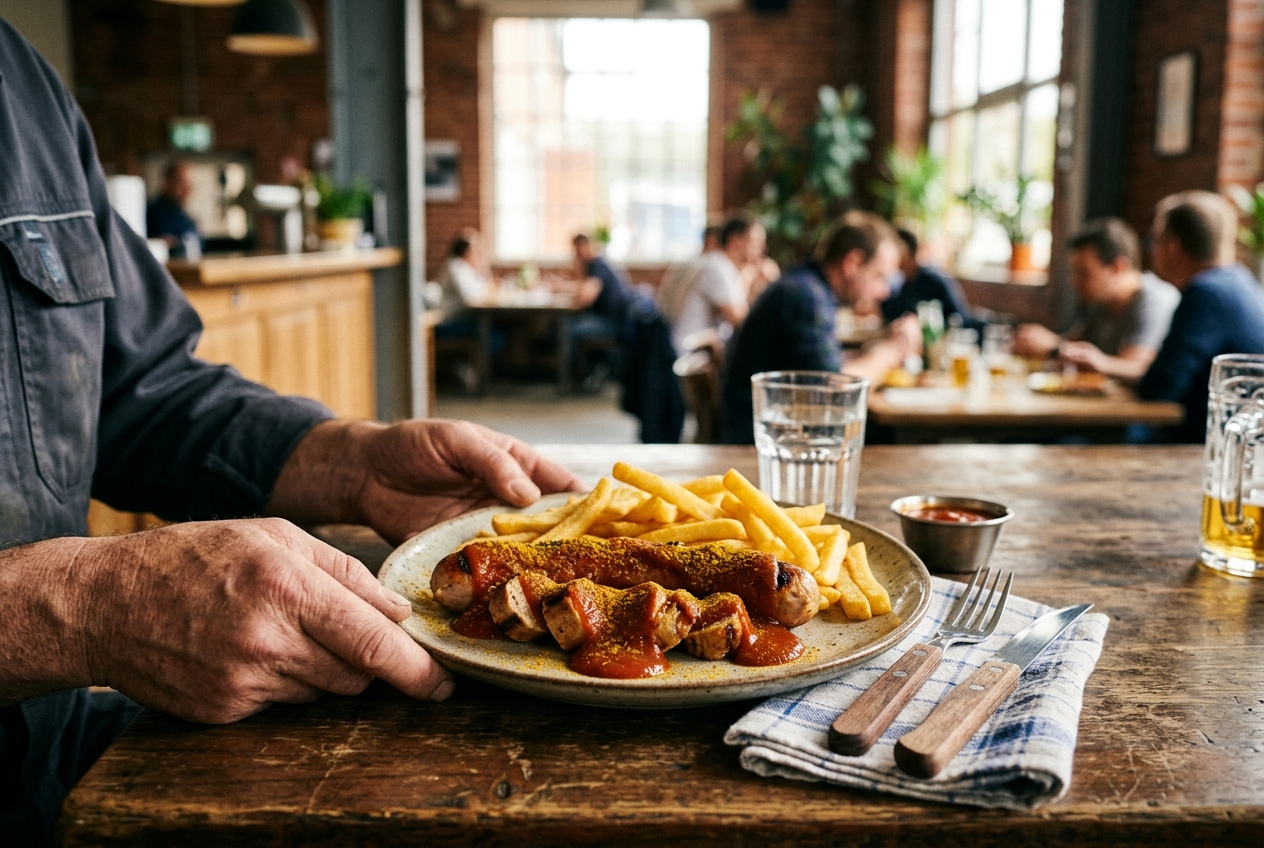
Which major automaker's in-house food product has its own product code and outsells many of its car models?
- Volkswagen's employee-only currywurst
- Ferrari's Modena balsamic vinegar
- BMW's Munich-brewed beer
- Mercedes-Benz's Stuttgart mustard
Answer: Volkswagen's employee-only currywurst — Volkswagen's currywurst carries official part number 199 398 500 A in the company's parts catalog, right alongside camshafts and brake pads.
The Sausage That Beat the Sedan
Volkswagen produces more than 7 million servings of its proprietary currywurst sausage every year at its Wolfsburg plant, where the recipe has been guarded since 1973. The sausage carries official VW part number 199 398 500 A in the company's inventory system, sitting in the same database as transmissions and tire assemblies. It outsells several vehicle models in the automaker's lineup when measured by units moved, a fact that delights the factory cafeteria staff and horrifies the brand consultants. The currywurst operation runs parallel to the assembly lines, with its own quality control standards and production quotas. Volkswagen sells the sausages in grocery stores across Germany, where shoppers can buy the same currywurst served in the employee canteen. The product generates millions in annual revenue, though VW has never disclosed whether the sausage division actually turns a profit after accounting for the industrial kitchen overhead.
How a Cafeteria Special Became a Consumer Brand
The currywurst recipe came from a single canteen cook who developed it to feed assembly-line workers during shift changes at the Wolfsburg factory. Volkswagen's works council, one of the most powerful labor groups in German manufacturing, pushed to make the sausage available beyond the factory walls in the 1990s. The company licensed the recipe to a local butcher, then brought production fully in-house when demand exceeded expectations. Each sausage follows a specification sheet as detailed as any vehicle component, with exact fat ratios, spice measurements, and cooking temperatures. The curry ketchup that accompanies it uses a separate formula, also proprietary, also produced on-site. Volkswagen's purchasing department sources the pork and spices through the same procurement system that orders steel and electronics, creating the surreal reality of commodity buyers negotiating both semiconductor contracts and paprika prices. The sausages move through a dedicated cold chain distribution network that mirrors the parts delivery system for dealerships.
The Factory Floor Politics Behind the Recipe
Volkswagen's works council wields unusual power under German co-determination law, holding half the seats on the company's supervisory board and veto rights over major operational decisions. The currywurst became a symbol of that influence when workers successfully demanded the recipe remain unchanged during cost-cutting pressure in the 2000s. Management proposed switching to a cheaper spice blend and was voted down. The sausage appears in labor negotiations as a non-monetary benefit, a tangible sign that VW values its workforce beyond wages. When the company opened a factory in Tennessee, workers there requested the currywurst be added to the American cafeteria menu, but health regulations and supply chain costs made it impractical. The Wolfsburg canteen serves approximately 18,000 currywurst meals per day when the plant runs at full capacity, making it one of Germany's highest-volume sausage operations. Retirees can still buy the sausage at employee discount rates, a perk written into pension agreements.
Why an Automaker Still Sells Sausages in 2026
The currywurst has become a marketing asset Volkswagen didn't plan for, a tangible product that humanizes a corporation better known for diesel emissions scandals and software-defined vehicles. The company sells branded currywurst at its Autostadt theme park in Wolfsburg, where tourists buy more sausages than scale model cars at the gift shop. Food critics have reviewed it, finding the quality genuinely good rather than novelty-grade, which creates positive press the PR department could never buy. The product anchors VW to its industrial roots at a time when the brand repositions toward electric vehicles and software subscriptions, giving nervous traditionalists something concrete to point to. Rival automakers have watched with interest but never replicated the model, concluding that the conditions that made it work—a powerful works council, a single-factory concentration of workers, German food culture around currywurst—can't be exported. The sausage operation continues because shutting it down would cost more in labor relations than it saves in operational efficiency, the kind of calculation that makes perfect sense inside a company and no sense at all to outsiders.
What most people get wrong
Most people assume the currywurst was a promotional gimmick or limited-edition novelty, but it's been in continuous production since 1973 and is treated as a serious product line with its own quality standards and distribution network.
Sources & further reading
Word of the Day
comestible noun · kuh-MESS-tih-bull
Something edible; an item of food, especially when considered as a commodity or trade good rather than sustenance.
“The SEC filing listed the factory's output in metric tons of steel, kilowatt-hours of electricity, and—inexplicably—annual comestible production exceeding seven million units.”
Joke of the Day
Why did the Volkswagen parts manager refuse to play Scrabble after 1973?
Every time someone played 'curry' he had to explain it's actually inventory code 199 398 500 A.
This Day in History
1970 — Consumer advocate Ralph Nader published a full-page ad in the New York Times urging General Motors shareholders to vote for campaign finance reform proposals at the annual meeting, launching the era of shareholder activism as a corporate accountability tool. The ad cost Nader $12,000 and marked the first time an outside activist bought space to directly lobby shareholders rather than management.
Enjoyed this issue?
Get the next one free, every morning.
More from Get Rich Slower