Monday, October 19, 2026
Trivia of the Day
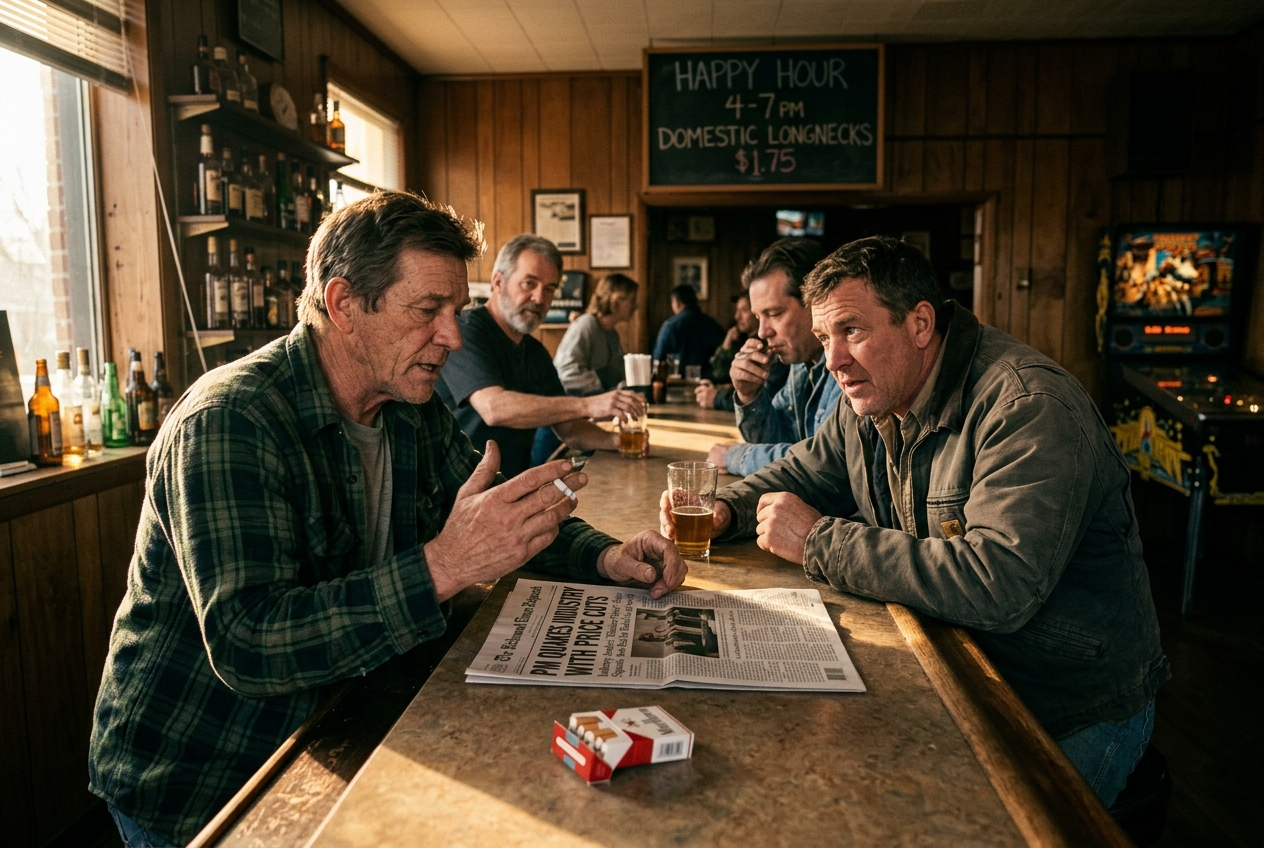
What name did Wall Street give to April 2, 1993, when Philip Morris slashed Marlboro prices by 20% and erased $13 billion in brand value in a single day?
- Black Tuesday
- Marlboro Friday
- Judgment Day
- Price War Wednesday
Answer: Marlboro Friday — The crash was so sudden that it sparked a decade-long debate about whether brand equity was real or just accounting fiction.
The 20% Gamble That Broke Brand Religion
On April 2, 1993, Philip Morris announced it would cut the price of Marlboro cigarettes by 20% to compete with generic brands that had captured nearly 30% of the market. Wall Street reacted as if the company had announced it was giving away cigarettes for free. The stock dropped 23% in a single session, erasing $13 billion in market value and dragging down every other consumer brand with it. Procter & Gamble fell 8%, Coca-Cola dropped 5%, and analysts scrambled to recalculate whether any premium product was worth the premium. The selloff was so dramatic that traders gave it a name by lunchtime: Marlboro Friday. It wasn't just a stock crash—it was a referendum on whether brands themselves had value, or whether decades of advertising had built nothing but expensive air.
The problem had been building for years, but Philip Morris had ignored it with the confidence of a company that owned the most recognized logo on earth. Generic cigarettes cost about 40% less than Marlboro, and cash-strapped smokers in a recession were switching in droves. By early 1993, Marlboro's U.S. market share had slipped from 30% to 22%, and the company's options were stark: defend the premium or watch the share bleed out entirely. CEO Michael Miles chose the nuclear option, slashing prices across the board and promising to spend $2 billion on marketing to hold the line. The announcement was meant to signal strength, but Wall Street heard panic. If Marlboro—the brand that had survived the Surgeon General's warning, the advertising ban, and the rise of the health movement—couldn't hold its pricing power, what brand could?
The Fallout Nobody Expected
The crash didn't stay contained to tobacco. Within hours, every company that sold a branded product at a premium price was under siege. Heinz, Kellogg's, Sara Lee—none of them touched cigarettes, but all of them watched their stock prices tumble as investors dumped anything that relied on brand loyalty instead of cost leadership. The logic was brutal: if consumers would abandon Marlboro for a generic, they'd abandon Tide for store-brand detergent, Coke for supermarket cola, and Levi's for whatever jeans Walmart stocked. The rout forced CFOs across America to defend line items that had never been questioned before. How much is a logo worth? What's the ROI on a Super Bowl ad? The answers, suddenly, were unclear. Some companies doubled down on advertising; others slashed budgets and launched their own generics. The consensus that had held since the 1950s—that brand-building was the path to durable profit—cracked in a single trading session.
Philip Morris itself survived, but the price cut didn't solve the problem it was meant to fix. Marlboro regained some share, but margins stayed compressed for years, and the company never fully recaptured the pricing power it had wielded before April 2. Michael Miles was forced out sixteen months later, and his successor spent the next decade trying to offset tobacco declines by acquiring food brands—Kraft, General Foods, Nabisco—in a strategy that looked more like diversification than confidence. The stock eventually recovered, but the lesson stuck: a brand is only as strong as the customer's willingness to pay extra for it, and that willingness is more fragile than any balance sheet suggests.
Why It Still Haunts Marketing Departments
Marlboro Friday lives on as the case study every brand manager is assigned in business school, usually right before the professor asks what they'd do differently. The answer is never clear, because the problem was structural: Philip Morris had built a premium brand in an industry where the product was identical across price points and the customer base was shrinking. Advertising could create preference, but it couldn't create value that justified a 40% price gap when rent was due. The mistake wasn't the price cut—it was waiting until the market share had already collapsed to make it. By the time Miles pulled the trigger, the damage was done, and the only question was whether to lose margin or lose volume. He chose both.
The crash also marked the beginning of the end for the ad-agency model that had dominated since the Mad Men era. If brands couldn't hold pricing power, why pay 15% commissions to the agencies that built them? The 1990s saw the rise of price-promotion marketing, loyalty programs, and eventually digital advertising that promised measurable ROI instead of aspirational gloss. Marlboro Friday didn't kill the thirty-second spot, but it mortally wounded the argument that brand-building alone was enough to justify a premium price. Today, every DTC startup that launches with performance marketing instead of a Super Bowl ad is making a bet that Marlboro Friday was the rule, not the exception: that customers care about price more than they care about the logo on the package, and that the margins everyone thought were durable were just borrowed time.
What most people get wrong
Many assume Marlboro Friday proved that brand advertising doesn't work, but the real lesson was narrower: premium pricing collapses when the product is commoditized and competitors undercut by 40% in a recession.
Sources & further reading
Word of the Day
captive adjective · KAP-tiv
describing a market, customer base, or audience that has no practical alternative and must accept the terms offered
“The stadium's captive crowd paid $12 for bottled water because the nearest exit was half a mile away.”
Joke of the Day
Why did the Philip Morris analyst refuse to play poker after April 2, 1993?
He'd already watched $13 billion disappear in a single hand.
This Day in History
1987 — On October 19, 1987, the Dow Jones Industrial Average fell 22.6% in a single session—still the largest one-day percentage drop in history—erasing $500 billion in market value in what became known as Black Monday. Program trading and portfolio insurance amplified the selloff, and the NYSE briefly considered closing early before deciding to ride it out.
Enjoyed this issue?
Get the next one free, every morning.
More from Get Rich Slower