Saturday, October 24, 2026
Trivia of the Day
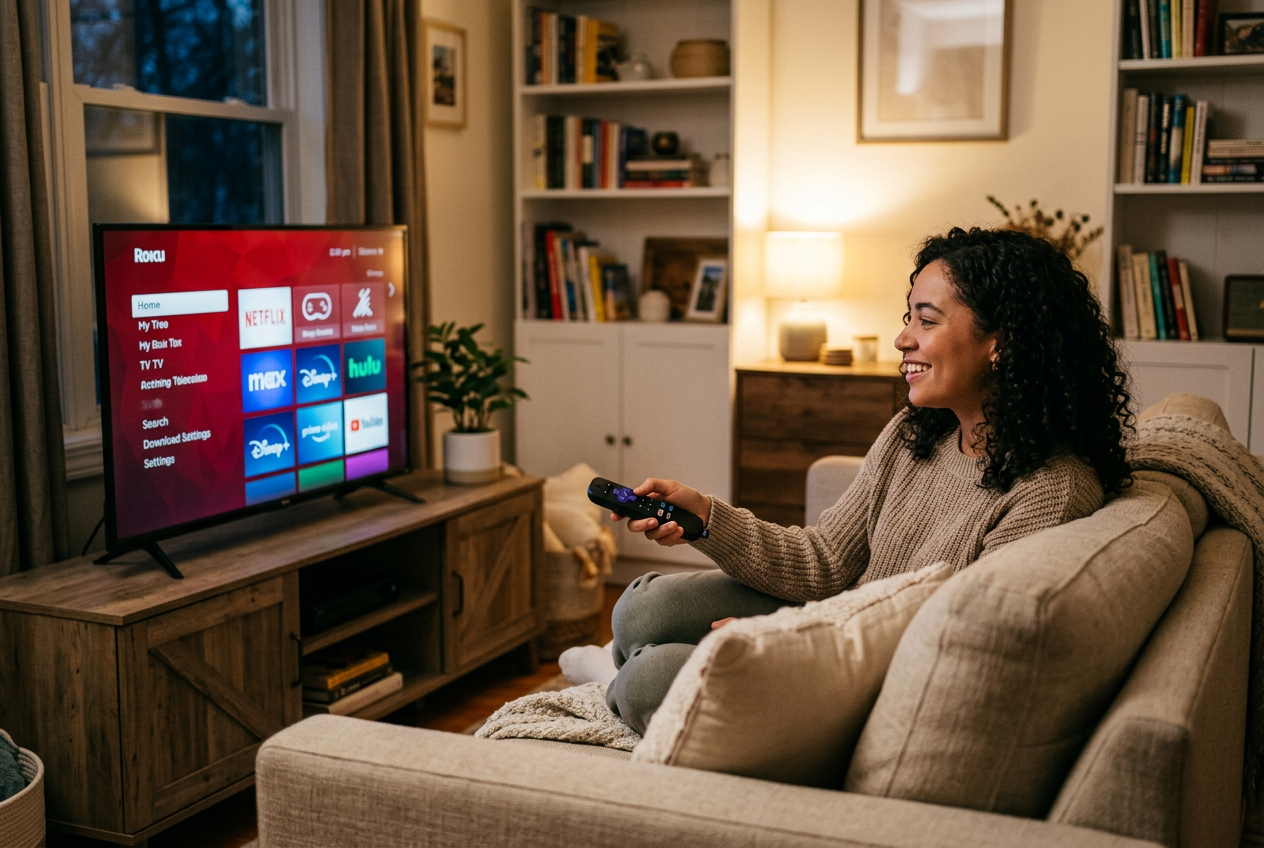
What streaming device company was originally created as a Netflix hardware project before being spun off?
- Roku
- Apple TV
- Chromecast
- Fire TV
Answer: Roku — Netflix funded Roku's development in 2007 to build a Netflix streaming box, then spun it off as an independent company when smart TVs emerged.
The Setup Netflix Didn't Want to Keep
In 2007, Netflix was still mailing DVDs in red envelopes and streaming was a side experiment launched that January. Reed Hastings knew the future meant delivering video over the internet, but hardware posed a problem: no cheap, simple box existed to pipe Netflix onto televisions. TiVo cost $300. Playstation 3 ran $600. Hastings tasked Anthony Wood, a ReplayTV founder Netflix had acqui-hired, with building a dedicated Netflix streaming player. Wood's team worked in a Los Gatos office, funded entirely by Netflix, prototyping a $99 set-top box codenamed "Project Griffin." The goal was utilitarian: get Netflix streaming into living rooms before someone else did. By mid-2007, Wood had a working device, a simple remote, and a problem. Netflix was about to kill the whole project.
Hastings saw the television industry shifting. Samsung, LG, and Vizio were all pitching built-in streaming apps. If Netflix launched its own hardware, it would compete with the TV makers it needed as partners. Selling a Netflix box meant declaring war on Sony, Panasonic, and every manufacturer that might otherwise preload the Netflix app. The strategic calculus was brutal: own a small hardware business or distribute to every screen on earth. Hastings chose distribution. He told Wood in late 2007 that Netflix wouldn't manufacture the player. But Hastings didn't kill the project outright. He offered Wood a deal: take the technology, the team, and $6 million in Netflix funding and spin it out as an independent company. Netflix would be the first app on the box, but the device would be platform-neutral. Wood accepted. In October 2008, Roku shipped its first player, the Roku DVP N1000, a purple-lit box that streamed Netflix and little else for $99.
How the Spin-Off Actually Worked
The separation gave Netflix exactly what it needed: a streaming device in market without the baggage of ownership. Roku remained independent, which meant Samsung and LG couldn't accuse Netflix of favoring its own hardware. Netflix maintained a board seat and invested additional capital in early funding rounds, but Roku controlled product decisions, pricing, and partnerships. Wood's first move was adding Amazon Video on Demand in 2009, turning Roku into a neutral platform. By 2010, Roku supported Hulu, Pandora, and MLB.TV. Netflix benefited from every Roku sold—each box came with a Netflix button on the remote and a 30-day free trial—but avoided the capital and support costs of hardware manufacturing.
Roku's independence let it survive the streaming wars Netflix would later dominate. When Disney Plus, HBO Max, and Peacock launched, Roku welcomed them all. The company made money not by selling hardware—players often sold near cost—but by taking a cut of subscription sign-ups and serving ads on the home screen. By 2023, Roku had 70 million active accounts and generated $3.1 billion in revenue, two-thirds from advertising and platform fees. Netflix, meanwhile, reached 260 million subscribers by avoiding the hardware trap. Hastings later said the Roku spin-off was one of the smartest decisions Netflix made in its first decade of streaming, because it let Netflix be everywhere without threatening anyone.
The Consequence Nobody Expected
The spin-off accidentally created Netflix's most powerful frenemy. Roku became the gatekeeper to American living rooms, and by 2020 it held 31% of the U.S. streaming device market. That gave Wood leverage. When HBO Max launched in May 2020, Roku delayed adding the app for months, reportedly demanding a larger revenue share and more prominent home-screen placement. WarnerMedia eventually capitulated. Peacock faced a similar standoff in 2020, missing Roku devices until September 2020, five months after launch. Roku's negotiating position was simple: if your app isn't on Roku, you're invisible to a third of U.S. streaming households. Netflix, as a board member and early investor, watched Wood use the same tactic against competitors Netflix now spent billions outbidding for content.
By 2021, Netflix and Roku's interests had fully diverged. Roku pushed its own ad-supported Roku Channel, which competed for viewer attention against Netflix. Netflix, which had opposed ads for years, launched its ad-supported tier in November 2022—placing it directly in Roku's monetization lane. The cozy 2008 partnership had curdled into a Cold War truce. Wood sold his remaining Netflix stock in 2017. Netflix's board seat quietly disappeared after Roku's 2017 IPO. Anthony Wood, the guy Hastings once paid to build a Netflix box, now runs a $10 billion public company that charges Netflix, Disney, and Paramount fees to reach viewers. Hastings spun off Roku to avoid competing with TV manufacturers. He accidentally created a middleman more powerful than any of them.
Why It Still Matters
The Roku spin-off is a case study in what venture capitalists call "strategic myopia versus platform thinking." Netflix optimized for 2008: it needed distribution partnerships more than hardware revenue. That decision let Netflix grow from 7.5 million subscribers in 2007 to 260 million today. But the spin-off also seeded a structural rival. Roku now controls app placement, search rankings, and ad inventory on millions of home screens. It can delay launches, demand fees, and promote its own content at Netflix's expense. In 2023, Roku generated $786 million in platform revenue—money paid by Netflix, Disney, and others for access. Netflix traded hardware margin for ubiquity and got ubiquity plus a rentier.
The lesson has shaped Big Tech's streaming strategies. Apple kept Apple TV in-house and tied it to services revenue. Amazon lost money on Fire TV devices for years but used them to lock viewers into Prime Video and IMDb TV. Google gave Chromecast away at cost because controlling the casting protocol mattered more than hardware profit. Netflix, alone among the giants, let its hardware play escape. Hastings has never publicly regretted the Roku spin-off—Netflix won the streaming wars anyway—but the company now pays Roku, Apple, and Amazon billions annually in app store fees and ad platform costs. Wood, meanwhile, tells investors Roku is a "streaming operating system," the Windows of the living room. He's half right. Roku is the OS Netflix funded, perfected, and then handed to a competitor, betting the future on apps instead of rails. Fifteen years later, that bet still pays off—just not for free.
What most people get wrong
Many assume Roku was always independent or that Netflix simply licensed its software. In reality, Netflix fully funded Roku's creation as an internal hardware project and only spun it off when TV manufacturers threatened to shut Netflix out if it competed with them directly.
Sources & further reading
Word of the Day
rentier noun · ron-TYAY
A person or entity that derives income from ownership of property or capital rather than from productive work or enterprise.
“Roku evolved from a hardware maker into a rentier, collecting fees from every streaming service desperate to reach its 70 million captive households.”
Joke of the Day
Why did the Netflix hardware engineer refuse to play poker after 2008?
He'd already folded the best hand he'd ever been dealt.
This Day in History
2003 — The New York Stock Exchange completed its transition to full decimal pricing on October 24, 2003, ending centuries of fractional quotes in eighths and sixteenths. The shift, mandated by the SEC in 2000, tightened bid-ask spreads and saved retail investors an estimated $1 billion annually—while gutting the profit margins of market makers who'd built entire businesses on fractional spreads.
Enjoyed this issue?
Get the next one free, every morning.
More from Get Rich Slower